


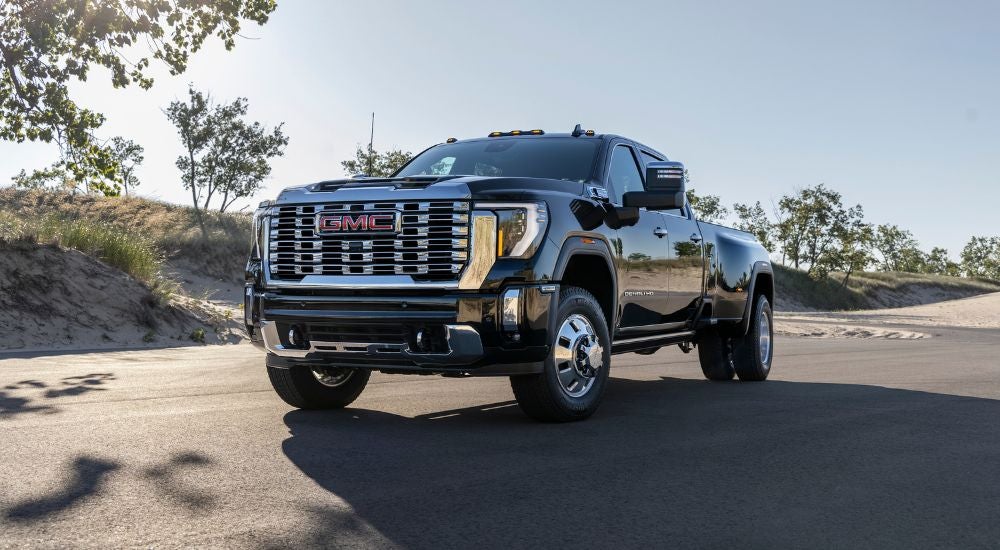
For fleet managers and contractors moving equipment across the Mississippi–Tennessee line, the right tech features can make the difference between downtime and productivity when visiting a GMC dealer near Southaven. The 2026 GMC Sierra 2500 HD and 3500 HD pickups take rugged capability a step further, offering tech-focused systems designed to tackle demanding work. For drivers who want serious capability without compromising premium finishes and advanced technology, these trucks deliver both.
The 2026 Sierra Heavy-Duty lineup blends HD capability with luxury finishes and advanced connectivity. With options like a 6.6-liter Duramax turbo-diesel paired to a 10-speed automatic and up to 36,000 lbs of towing capability, these trucks tackle high-volume workloads. Additional equipment, such as trailer-dedicated monitoring and bed sensors, translates into increased efficiency on job sites and fewer errors when loading gear, towing trailers, or maneuvering in tight spaces.
At the end of a long workweek in the Southaven area, tackling weather-soaked gravel ramps and highway hauls comes down to performance and dependability. The 2026 Sierra 2500 HD and 3500 HD, available at Crossroads GMC, deliver a premium curb profile without compromising on work-truck utility. In short, buyers don’t have to choose between comfort and capability. For businesses that demand day-in, day-out durability, these six tech features stand out.
1. Camera Systems for Precision Hookups and Maneuvering
Modern camera tech on the 2026 Sierra HD solves one of the biggest time wasters in commercial work: aligning a heavy trailer with limited visibility. Tools such as the standard Hitch Guidance, along with available features like Transparent Trailer View, the cargo bed camera, and HD Surround Vision, give operators clear sightlines around the truck and trailer. These systems reduce the number of correction attempts during hookups and help drivers position long equipment trailers in tight job-site spaces without relying on a second person.
This level of visibility matters when workdays include backing into barns, navigating fenced yards, or staging trailers near other machinery. Camera feeds remain clear even in low light, which helps early morning and late-day crews stay on the move. For fleets with rotating drivers, these systems standardize the process and help eliminate alignment mistakes that can slow down an entire crew.
2. Digital Tow Management and Smart Trailer Integration
The available GMC ProGrade Trailering System provides commercial operators with digital tools that help manage trailer setup, monitor selected trailer functions, and store driver-preference settings. Trailer profiles can store brake-gain settings, track mileage for maintenance reminders, and alert operators to detected light outages or issues with connected trailer sensors. This helps companies running multiple trailers, such as equipment rental businesses or land-capping crews, stay organized and maintain trailers more efficiently without relying solely on manual logs.
Smart Trailer Integration, when paired with compatible trailers, also improves consistency across drivers. Tow/haul data appears on the driver display, helping operators maintain proper speed and braking behavior on grades or in stop-and-go traffic. With these tools, fleet managers can reduce downtime, prevent equipment damage, and keep trailers in rotation for longer periods. Owner-operators also benefit from an easy interface and stored preferences.
3. Power Delivery and On-Site Electrical Support
The 2026 Sierra HD offers integrated bed power outlets and in-cab charging options that support the use of power tools, battery packs, and diagnostic equipment directly from the truck. Crews can power saws, pumps, compressors, and chargers without relying on portable generators. This helps reduce setup time on smaller job sites or rural work locations where stable power is limited.
Electrical access in the bed also supports mobile repair work. Agricultural operators can run fencer chargers, pump monitors, and lighting rigs directly from the truck during early morning or after-dark tasks. For contractors handling short-duration jobs, onboard power makes the truck a functional base of operations.
4. Suspension and Ride-Stability Tech for Heavy Loads
The 2026 Sierra 2500 HD and 3500 HD are built with robust suspension components that stabilize the truck under payload and while towing near its maximum capacity. Available Multimatic DSSV-damped shocks and chassis work to maintain predictable steering and braking behavior when carrying materials such as stone, concrete forms, seed pallets, or liquid tanks, ensuring consistent handling that reduces fatigue during long days supporting multiple job sites.
Traction control calibrations further help the truck remain composed on rural gravel roads, uneven work surfaces, or wet construction sites. When crews need to tow heavy equipment across fields or haul materials through half-developed subdivisions, stability features contribute to safer transitions and smoother operation during high-weight tasks.
5. Fleet Connectivity and Driver Interface Technology
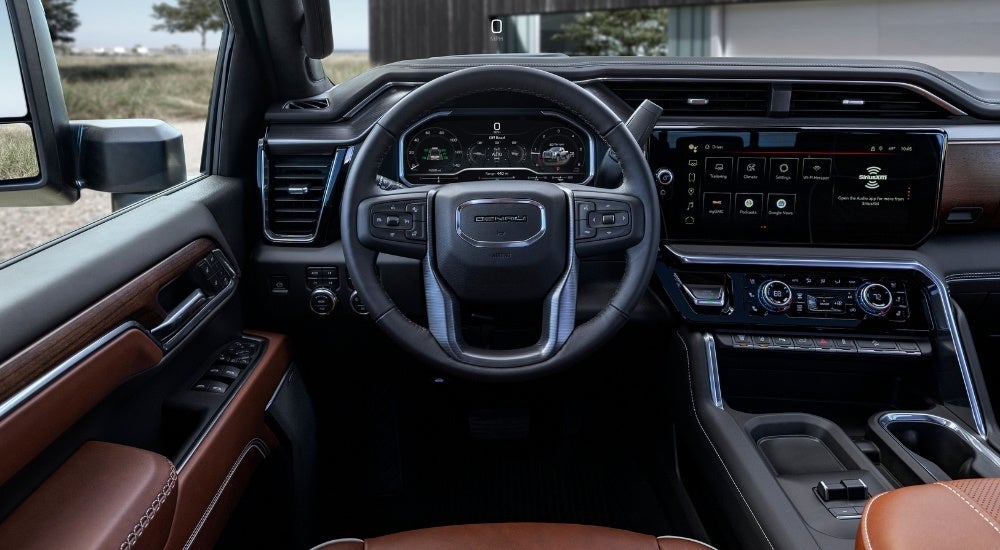
The 13.4-inch center display and 12.3-inch driver cluster give operators large, clear interfaces for navigation, job assignments, and work-order details. Integrated fleet telematics compatibility supports routing, fuel tracking, idle monitoring, and maintenance scheduling, enabling managers to coordinate multiple trucks on projects that require precise timing.
These systems also create a more consistent driving experience across new hires and seasoned employees. Clear menus and simplified layouts reduce errors, while wireless device integration enables technicians and supervisors to access schedules and service documentation without relying on separate equipment. The result is smoother daily operations and fewer communication gaps on busy job sites.
6. Safety and Operator Assist Systems for High-Duty Cycles
Operator-assist systems on the 2026 Sierra HD help reduce long-day fatigue and prevent minor incidents that can create costly downtime. Features such as Forward Collision Alert, Lane Keep Assist, and Blind Zone Trailer Assist provide support during urban deliveries, highway towing, and tight maneuvering around equipment or building materials. Together, these technologies help maintain awareness when drivers are cycling through multiple stops.
For companies where trucks rotate between drivers, consistent safety support helps level the playing field. Newer operators benefit from clearer cues, and experienced drivers appreciate the reduced strain during long hauls or congested work-zone travel. For fleets, fewer small incidents result in more predictable operating costs and improved uptime across the board.
Technology That Supports Real Work
Commercial buyers judge a truck by how well it handles the pressure of daily operations. The 2026 Sierra 2500 HD and 3500 HD stand out by offering technology that tackles real-world tasks without unnecessary complexity. Every system—from camera visibility to tow management—reduces the time it takes to set up, haul, load, and move equipment. Those gains matter when a full workday leaves little room for delays.
For commercial buyers and fleet operators, features such as transparent trailer view and up to 14 camera angles redefine how a truck supports work. A large touchscreen, built-in connectivity, wireless smartphone integration, and driver alerts reduce training time and cut the risk of misloads or blind-spot incidents. Plus, the Sierra’s premium interior materials and design showcase a company’s professionalism when crews arrive at client sites or job trailers.
Fleet managers gain even more value from the connectivity features built into the 2026 Sierra HD lineup. Scheduling, tracking, and maintenance planning become easier when telematics tie into a truck’s onboard systems. Combined with the Sierra’s towing capability and stability technology, these tools help companies maintain predictable uptime and lower their overall operating costs. Productivity improves when the truck works with the driver rather than requiring extra steps to manage heavy loads or complicated attachments.
Together, these technologies position the 2026 GMC Sierra 2500 HD and 3500 HD as reliable partners for commercial work. In Southaven, whether hauling equipment, supporting field crews, or serving as a mobile power source, the Sierra HD lineup brings capability and modern function to industries that depend on durable, dependable trucks.