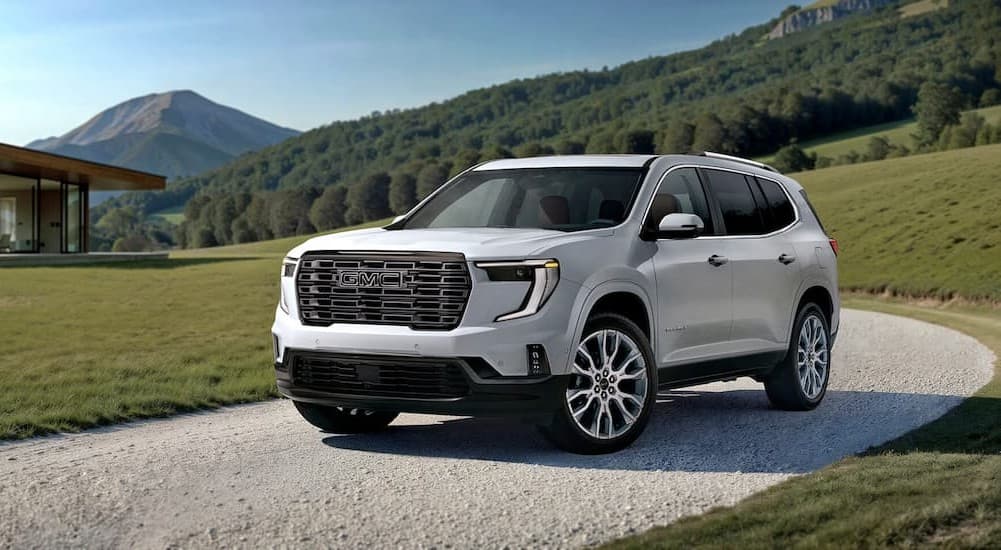



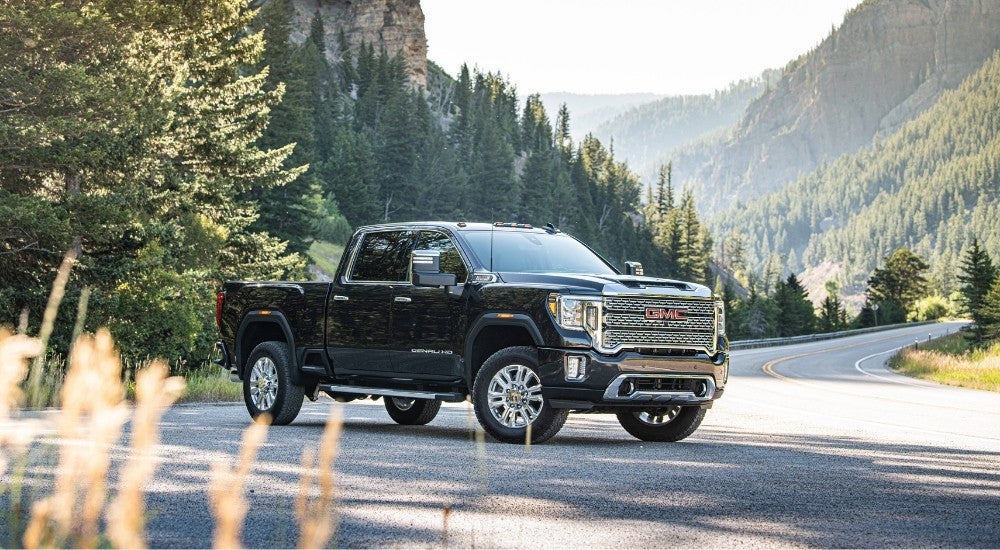
Searching for a used truck for commuting can be pretty discouraging if you don’t know where to start. There are an extensive amount of options you have to choose from. But here at Crossroads GMC, as your used truck dealer, we can help narrow the search for you so you can find the best truck for your needs.
We have created a guide of the top commuter trucks on the market based on their fuel economy because, let’s face it: when you tend to travel lengthy distances regularly, fuel efficiency will be essential in helping you decide on a model. We have also broken the guide up to include both mid-size and full-size trucks so you can see the options available to you as a solo commuter or if you’re looking to commute with your family or other passengers. Within the different size categories, we have included different engine options because hybrids and diesel engines are in a league of their own when compared to gasoline-powered engines. So go ahead and start narrowing down your options with our guide on the top commuter trucks.
Top Mid-size Commuter Trucks
Since mid-size trucks are smaller compared to full-size models, they don’t need as much engine power to drive them. In return, they get better fuel economy but also less capability from their smaller, lesser powered engines. So as long as you’re looking for a truck primarily for commuting by yourself or with only a couple extra passengers, with the occasional need for light-work and off-road capabilities, you’ll be satisfied with a mid-size pickup. While there may not be any battery-powered options as of the 2022 model year, there are some great diesel and gasoline-powered options available for you.
Mid-size Commuter Trucks: Diesel-Powered Models
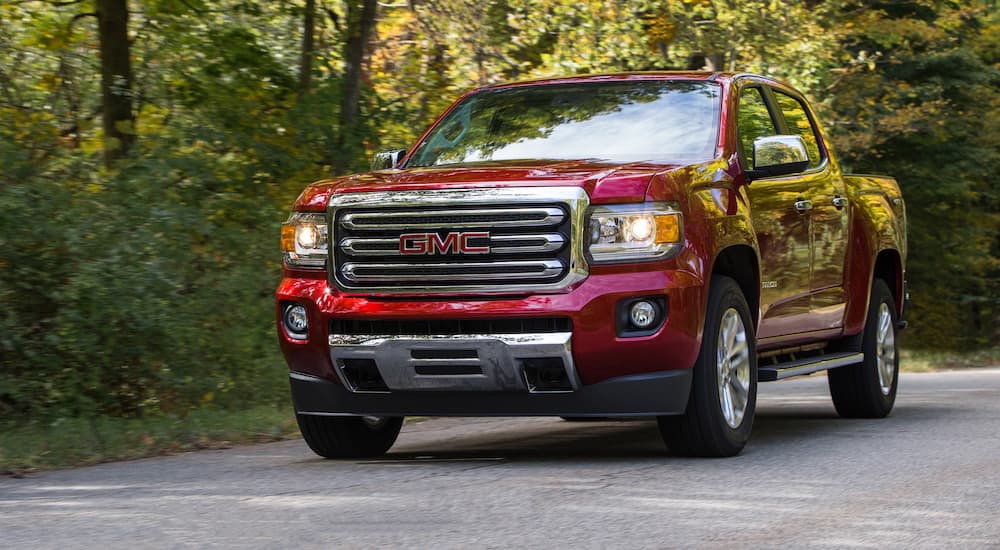
Diesel engines will usually always get you farther between your stops to fuel up at the gas station, which is why they’re recommended over the gasoline-powered trucks for fuel efficiency. For diesel options, the Chevy Colorado and GMC Canyon take the lead by default since no other brands offer mid-size diesel trucks. They are both a subsidiary of GM, therefore, share the same 2.8L Duramax 4-cylinder turbo diesel, which has been an option for both models since 2016. With these trucks, you can expect an estimated combined rating of 23 mpg (miles per gallon) in rear-wheel drive and 22 mpg in four-wheel drive. Since GMC is known for its upscale designs and features, if you’re looking for premium amenities, then the Canyon would be the model for you. You could always opt to save some money upfront and go with a higher-level trim Colorado, but either choice will save you fuel costs.
Mid-size Commuter Trucks: Gasoline-Powered Models
As for the more common gasoline-powered mid-size trucks, the Ford Ranger is the most efficient with its 2.3L 4-cylinder EcoBoost engine, which it’s had since its return for the 2019 model year. It is estimated at getting a combined average of 23 mpg for rear-wheel drive and 22 mpg for four-wheel drive. Coming in at a close second is both the Chevy Colorado and GMC Canyon, once again sharing an engine, the 2.5L 4-cylinder, estimated at getting a combined 22 mpg for rear-wheel drive and 21 mpg for four-wheel drive. This engine can be found in models as far back as the 2015 model year but won’t be found on some of the 2022 models, nor any future models, since it is being replaced.
The Toyota Tacoma comes in as the third most fuel-efficient mid-size truck with its 4-cylinder and 6-cylinder engines. The 2.7L inline 4-cylinder has been an option for the Tacoma since the 2019 model year. It can get a combined average of 21 mpg in rear-wheel drive and 20 mpg in four-wheel drive. The more powerful 3.5L 6-cylinder engine, which can be found in Tacomas as old as the 2015 model year, can get an average of 21 mpg in rear-wheel drive and 20 mpg in four-wheel drive when paired with the 6-speed automatic transmission. When paired with the 6-speed manual transmission only available with four-wheel drive, it can get a combined average of 18 mpg, which is still pretty impressive for a truck.
Top Full-Size Commuter Trucks
Moving on to the larger full-size trucks with more powerful engines, you’ll notice that many provide less fuel economy than mid-size pickups unless they are equipped with a hybrid or diesel engine. Full-size trucks are a great option for those looking for extra or roomier passenger seating and more interior space for your work equipment. Plus, with a more powerful engine, you’ll be capable of greater towing, hauling, and off-roading capabilities. If this sounds more like the type of truck you need, with multiple engine types to choose from, including all-electric, you’re bound to find a model efficient enough for your needs.
Full-Size Commuter Trucks: All-Electric Models
If you aren’t against buying a brand new truck for commuting, and you’re looking for the best range on the market, then an all-electric model will be the option for you. For the 2022 model year, you’re in luck because three brand new all-electric pickups have made their debut on the market. Although the GMC Hummer EV Pickup comes with a hefty price tag, it also comes with the greatest range of 329 miles with its 212.7 kWh 3 motor battery pack and impressive capabilities on and off the road to continue with the nameplate’s heritage. The Ford F-150 Lightning comes in second with its 131 kWh Extended Range with an estimated range of 320 miles, and is the most affordable out of the three models.
New to the industry is the American electric vehicle brand, Rivian, and its first vehicle, the R1T. It, too, is built to maximize more than just fuel efficiency and is designed specifically as an electric adventure vehicle that can handle daily commuting. It’s estimated to deliver a range anywhere between 260 to possibly more than 400 miles depending on the variation you choose. Rivian expects the Dual-Motor with the 21-inch wheels to be the most efficient combination. So ultimately, the R1T may get you the best range out of them all.
Full-Size Commuter Trucks: Hybrid Models
Since all-electric vehicles are still fairly new to the market, if you aren’t ready to jump right into a full-electric model, there are hybrid trucks available that are powered on both battery and fuel. Ford introduced its first hybrid F-150 in 2021 and carried it into the 2022 lineup with its 3.5L PowerBoost Turbo 6-cylinder hybrid, estimated to get a combined rating of 23 mpg, in return taking the lead over the new 2022 Toyota Tundra hybrid. With its 3.5L i-Force Max Turbo 6-cylinder hybrid engine, the Tundra is expected to get an estimated combined rating of 22 mpg for rear-wheel drive and 21 mpg for four-wheel drive. Whether you’re looking for a new or used commuter truck, you have full-size hybrid options that are eco-friendly, efficient, and fully capable of everything a truck should be.
Full-Size Commuter Trucks: Diesel-Powered Models
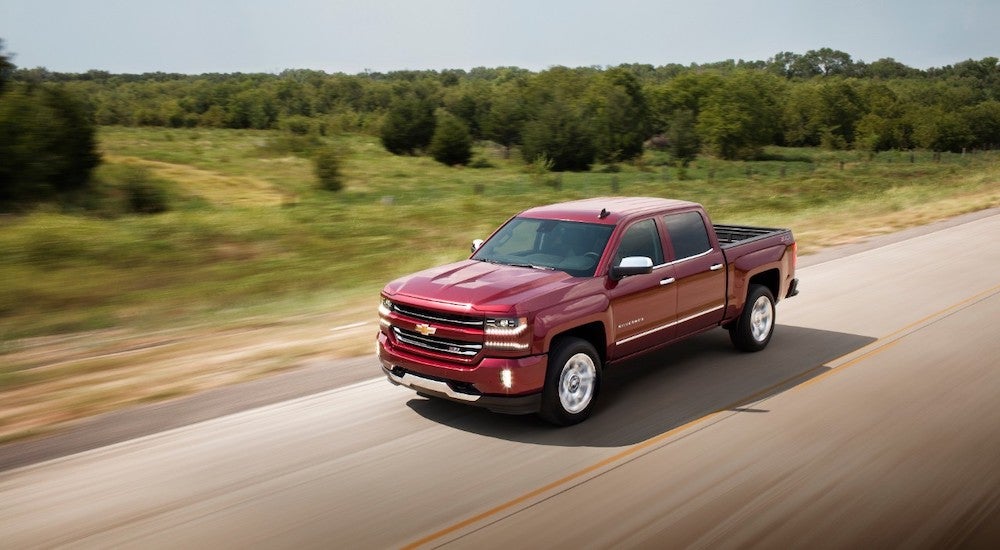
Many die-hard truck enthusiasts love the power derived from the diesel engine. If diesel is your preferred choice for fuel for mid-size trucks, you have some great options to choose from for commuting. Three of the light-duty full-size diesel truck options, the Chevy Silverado 1500, GMC Sierra 1500, and Ram 1500, all have the same estimated combined rating of 26 mpg for rear-wheel drive and 24 mpg for four-wheel drive. Since the Silverado and the Sierra share the same engine, their capabilities will be the same, and they are rated to tow more with their capacity of 13,300 pounds versus the 12,560 pounds with the Ram 1500.
From 2018 through the 2021 model year, Ford F-150 offered a 3.0L Power Stroke 6-cylinder diesel engine option, but it was discontinued for 2022. This engine option provides an estimated combined rating between 23 and 24 mpg depending on the model year, which is much less than the other three trucks mentioned and only slightly more than its most fuel-efficient gasoline engine. However, if Ford is your preferred automotive brand, although you may not be able to find a new model, you can still find a used diesel F-150 at your used truck dealer.
Full-Size Commuter Trucks: Gasoline-Powered Models
When it comes to the most fuel-efficient gasoline-powered full-size trucks for commuting, both the Ram 1500 and the Ford F-150 take the lead with an estimated combined 22 mpg for rear-wheel drive and 21 mpg for four-wheel drive. But if you’re looking for the most capable option, Ford’s 2.7L EcoBoost Turbo 6-cylinder can tow up to 10,100 pounds versus the Ram’s 3.6L Penstar 6-cylinder with eTorque rated for a capacity of only 7,750 pounds. For a tied second, we see GM models in the rank with the Chevy Silverado 1500 and the GMC Sierra with their shared 2.7L Turbo 4-cylinder, found in models dating back to 2019. This engine gets these trucks an estimated combined rating of 20 mpg with rear-wheel drive and 18 mpg with four-wheel drive, which isn’t that much less than the other two models.
Conclusion
Determining which truck model will be best for your commuting needs will be a hard decision to make. There are so many great truck models to choose from these days, but there is one specification that you’re going to want to look for on your truck-buying journey: fuel economy. With the guide that we put together of the most efficient trucks, broken down into categories of size and engine type, we hope you’ll find your way into the driver’s seat of the perfect commuter truck for yourself. But if you’re still having trouble deciding which model is right for you, don’t hesitate to call or come down to Crossroads GMC because, as your used truck dealer, we know a thing or two about trucks.