




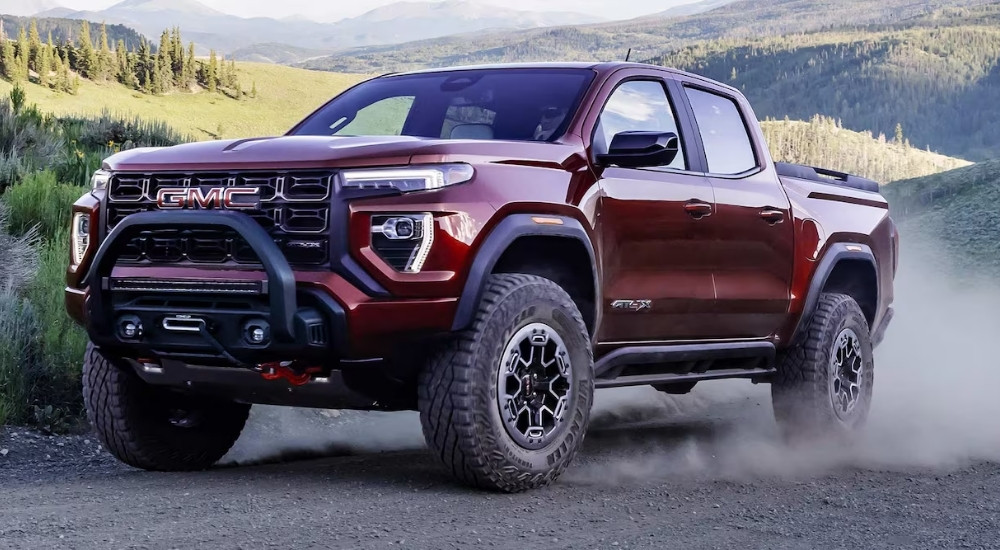
While full-size pickups have long been the king of the jungle in the pickup segment, their mid-size counterparts might actually represent a more practical investment for the average driver. Balancing power, maneuverability, and utility, mid-size pickups like the GMC Canyon and Chevy Colorado actually offer a few key advantages over full-size pickups in terms of fuel economy, off-road ability, and price. If you’re on the hunt for your next mid-size pickup and have been considering a GMC Canyon for sale, the Chevy Colorado might also be worth a closer look.
While the two trucks aren’t identical, the two GM pickups do share some notable similarities. Picking between these two popular mid-size models can be a challenge, which is why we’ve compiled a short guide outlining some of the key differences between the two trucks. From performance and fuel economy to off-road trims, towing, tech, and safety features, we’ll walk you through some of the key points to consider when weighing the 2025 Chevy Colorado against the 2025 GMC Canyon.
Both 2025 Models Offer Similar Performance
While the GMC Canyon was traditionally offered with a more potent powertrain than the Chevy Colorado, the two trucks are put on even footing for the new model year. Starting in 2025, both pickups will be powered by an identical turbocharged 2.7-liter inline-four that produces 310 horsepower and 430 lb-ft of torque. This represents a notable improvement over the 2024 Colorado which, despite featuring the same 2.7-liter engine, had the output of some of its lower trims limited to just 237 hp.
While this increase in horsepower is certainly a reason to celebrate, it’s the engine’s torque that really deserves all the attention. A little turbocharging goes a long way when it comes to the four-cylinder engine, allowing the Canyon and Colorado to best V6 offerings found in the Honda Ridgeline and Jeep Gladiator. These accomplishments might come as a bit of surprise until you stop to consider the fact that mid-size pickups are built around the same base engine that can be found in the full-size Chevy Silverado 1500 and GMC Sierra 1500. Packing that sort of power into a mid-size package is a surefire recipe for success, and one that allows the Canyon and Colorado to hold their own in a fiercely competitive segment.
A Look at Fuel Economy
Despite sharing the same turbocharged 2.7-liter inline-four engine, the 2025 Canyon and Colorado do differ in terms of fuel economy. It’s a small difference to be sure, with the GMC offering an EPA-estimated 19 MPG in the city and 23 MPG on the highway to the Chevy’s 20 MPG in the city and 24 MPG on the highway, but if you’re the type of driver who likes to limit their trips to the pump, even the tiniest margin might be worth considering. Drivers should also be mindful of the trade-off between off-road ability and fuel economy.
All-wheel drive has countless benefits when it comes to improving traction and keeping you firmly planted on the road, but the feature will also see the Canyon and Colorado’s fuel economy reduced to around 18 MPG in the city and 22 MPG on the highway. The Canyon’s off-road trims, which are equipped with knobby mud-terrain tires, offer around 17 MPG in the city and 20 MPG on the highway, which is similar to the Colorado’s ZR2 trim. The thirstiest truck of the bunch would have to be the Colorado ZR2 Bison, which returns around 16 MPG in the city. This might limit the trim’s appeal amongst those who spend most of their time on paved surfaces, but if you’re looking to log some serious adventure time with a little off-roading or overlanding, fuel economy probably isn’t your primary concern.
Towing Capabilities
Those seeking the best towing capacity in the mid-size pickup market don’t have any tough decisions to make when it comes to choosing between the 2025 Colorado and Canyon. Both trucks offer best-in-class towing with the ability to pull up to 7,700 lbs. That represents a significant improvement over some of the industry’s most popular midsize trucks with the Canyon and Colorado outshining the Jeep Gladiator (7,000 lbs), Nissan Frontier (6,690 lbs), Toyota Tacoma (6,500 lbs), Hyundai Santa Cruz and Honda Ridgeline (5,000 lbs) by a wide margin.
While the Canyon and Colorado can’t match the pure brawn of their full-size siblings in the Chevy Silverado and GMC Sierra—which both offer a massive 13,300 pounds of max towing—the two trucks still easily outshine their closest competitors. While opting for one of the off-road-focused trims, whether it be the Colorado ZR2 or Canyon AT4X, sees the total towing capacity reduced to around 6,000 pounds, it’s a small price to pay for the sort of fun these adventure-ready rigs can provide.
What Kind of Tech Do These Models Offer?
If you’re looking to maximize your screen time, the 2025 Colorado and Canyon both have a lot to offer. The trucks come equipped with a 11.3-inch touchscreen infotainment display and an 11-inch Driver Information Center across the entire trim ladder, which is a refreshing change of pace in a segment where dashboard tech hasn’t always been the focus. The two pickups also include the full raft of connectivity options, from USB ports and Bluetooth to smartphone integration technology like Apple CarPlay and Android Auto that can be used to connect to some of your favorite apps, provide directions and stream content while you’re on the go.
Whether you prefer cruising to podcasts, streaming your desert island album, or catching the latest scores on a sports radio station, the Canyon and Colorado are designed with a satisfying stereo system that’ll allow you to enjoy every moment. Each truck comes standard with a six-speaker audio system, but can be upgraded to an optional premium Bose setup depending on the trim and package you select.
Wireless device charging, Wi-Fi hotspot capability, an underbody camera and a futuristic heads-up display are available on both models, those seeking a more modern driving experience should probably consider test driving the Canyon. GMC’s pickup has a slight edge in terms of interior tech, and is also graced with more premium materials than its Chevy cousin. The Canyon’s Jet Black CoreTec interior is one example, with the luxury vinyl upholstery providing a more refined alternative to some of the more basic finishes offered on the Colorado.
Safety and Driver Assistance Features
The story is much the same when it comes to the two pickup’s suite of advanced driver assistance systems (ADAS). The Colorado and Canyon’s packages do go by different names—Chevy Safety Assist and Pro Safety, respectively—and offer a very similar list of features focused on improving safety, confidence and convenience behind the wheel, but the Canyon adds a few extra perks that give it a slight edge over its Chevy companion. Both trucks come with all the standard ADAS fare like Forward Collision Alert, Automatic Emergency Braking, and Lane Keep Assist with Lane Departure Warning with premium features like Adaptive Cruise Control available as an optional add on.
Both models also come with features like IntelliBeam automatic high-beam headlights, available Super Cruise hands-free driving technology, and an HD Surround Vision camera that allows the truck to nestle into a tight parking spot or making that tricky trailer connection without all the trial and error that can come with a traditional truck.
The Chevy has learned some new tricks for 2025 with every Colorado trim gaining Rear Park Assist, Rear Cross Traffic Braking, and a Blind Zone Steering Assist feature that can automatically adjust the steering wheel to prevent a collision with a vehicle that might be lurking just outside of your field of view. These additions help to bridge the gap between the two models, but if you’re in the market for a pickup that leverages the latest in automotive safety tech, the Canyon has a clear edge.
What Kind of Off-Road Trims Are Available?
Midsize trucks are the perfect partner for a weekend spent exploring the road less traveled. The combination of power, size, and technology make these pickups well-suited for a little off-the-grid adventure, and the GMC Canyon and Chevy Colorado are no exception. Both models are available with a range of off-road-focused trims with the Colorado offering four options and the Canyon delivering three distinct models.
It all starts with the Colorado Trail Boss, which sees the LT trim upgraded with a two-inch lift, two-speed transfer case, all-terrain trees and an automatic locking rear differential. The Z71 takes a more premium approach to the off-road segment, adding heated, power-adjustable outside mirrors, synthetic leather seating and LED lights while also upping the truck’s utility with a set of striking red tow hooks. The ZR2 represents the Colorado’s most capable off-road guise with Chevy providing the truck with mud-terrain tires, Multimatic DSSV dampers, a three-inch lift, and driver-selectable front and rear locking differentials.
The ZR2 Bison package sees Chevy team up with the off-road and overlanding experts at American Expedition Vehicles (AEV) to treat the truck to a host of AEV-designed enhancements like stamped steel front and rear bumpers with integrated recovering points and a winch mount, 35-inch mud-terrain tires, AEV fender flares, and Multimatic jounce-control/DSSV dampers that’ll allow you to catch a little air while reducing the chances of bottoming out once you hit the ground.
The GMC Canyon might offer one less off-road trim than the Colorado, but that doesn’t mean it’s going to get left behind once you hit the trail. The AT4 trim represents the Canyon’s entry-level off-road option, but there’s nothing basic about this rugged package. Packed with a two-inch lift, off-road suspension and Autotrac two-speed transfer case, the AT4 also gains a unique set of 18-inch Dark Gray machined aluminum wheels and all-terrain tires. It’s a solid start, and one that will provide plenty of off-road fun without inflating the truck’s price tag.
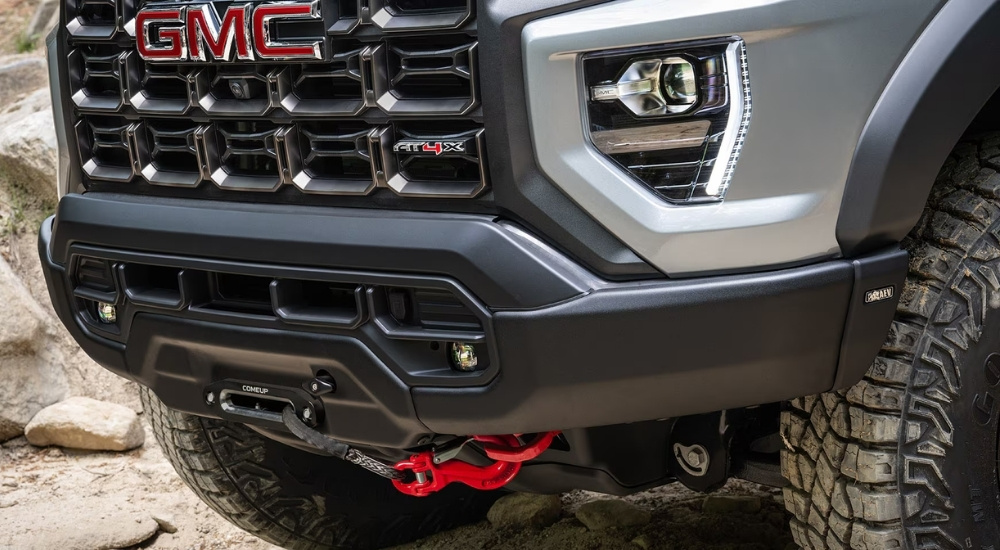
The AT4X and AT4X AEV Edition pull out all the stops to offer a burly off-road experience that still manages to prioritize luxury. A three-inch lift gives the AT4X trims plenty of ground clearance while front and rear electronic locking differentials deliver consistent traction no matter how messy the trail might become. Like the Colorado ZR2, the trims are also outfitted with Multimatic’s jounce control dampers while underbody skid plates, off-road rocker protection and underbody cameras ensure your excursion won’t end with a frustrating recovery effort.
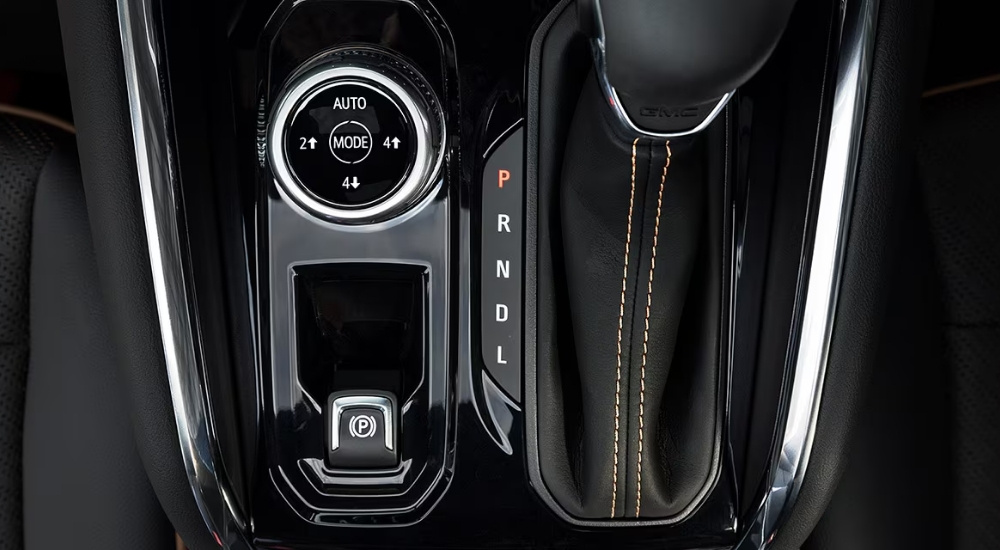
AEV provides the AT4X with stamped steel bumpers and beadlock-capable wheels that allow drivers to let out a little air to coast over loose surfaces like mud and sand. Both the Canyon and Colorado are available with customizable drive modes, including dedicated Off-Road and Terrain modes and a unique Baja mode that’s perfect for speeding through the sort of hard-packed off-road terrain one would find on the Pacific peninsula.
Both Models Are Excellent Midsize Pickup Options
Choosing between the 2025 Chevy Colorado and GMC Canyon largely comes down to a matter of personal taste. If you’re the type of buyer that values a premium driving experience that doesn’t skimp on any of the utility, performance, and off-road features that define the pickup segment, the GMC Canyon is hard to ignore. Packed with a long list of luxury features, including premium materials, and plenty of cutting-edge comfort and convenience tech, the Canyon sets itself apart from the rest of the mid-size class with a focus on design that few models can match.
If you’re in the market for a value-packed pickup that’s just as comfortable on your daily commute as it is fording streams, clawing through the mud and exploring new terrain, the Chevy Colorado makes a pretty strong case for itself. Consistently ranked as one of the industry’s best-selling mid-size models, the Colorado has earned a place in the hearts, and garages, of countless drivers in its 20-plus years on the market. While we’ve provided a brief overview of the two models, there’s no substitute for a good test drive. Stop by Crossroads Chevrolet GMC today and see how the 2025 Chevy Colorado and GMC Canyon are continuing to up GM’s pickup profile.
Connect with us


- January 2026
- December 2025
- November 2025
- October 2025
- September 2025
- August 2025
- July 2025
- June 2025
- May 2025
- April 2025
- March 2025
- February 2025
- January 2025
- December 2024
- November 2024
- October 2024
- September 2024
- August 2024
- July 2024
- June 2024
- May 2024
- April 2024
- March 2024
- February 2024
- January 2024
- December 2023
- November 2023
- October 2023
- September 2023
- August 2023
- July 2023
- June 2023
- May 2023
- April 2023
- March 2023
- February 2023
- January 2023
- December 2022
- November 2022
- October 2022
- August 2022
- July 2022
- June 2022
- May 2022
- April 2022
- March 2022
- December 2021
- October 2021
- September 2021
- August 2021
- July 2021
- June 2021
- May 2021
- March 2021
- February 2021
- January 2021
- December 2020
- November 2020
- October 2020
Archives
- 2023 GMC Sierra Trim Levels
- Booneville Chevy Dealer
- Booneville GM Dealership
- Cars for Sale
- Certified Pre-Owned Chevy Dealer
- Chevy Dealer
- Chevy Dealer in Collierville, TN
- Chevy Dealer in Corinth, MS
- Chevy Dealer in Olive Branch MS
- Chevy Dealer Near Baldwyn
- Chevy Dealer Near Burnsville
- Chevy Dealer Near Henderson
- Chevy Dealer Near Iuka
- Chevy Dealer Near Me
- Chevy Dealer Near Ripley
- Chevy Dealer Near Savannah
- Chevy Dealer Near Southaven
- Chevy Dealers in MS
- Chevy Equinox for Sale
- Chevy Equinox for Sale in Corinth
- Chevy Financing
- Chevy for Sale
- Chevy for Sale Near Booneville
- Chevy Silverado for Sale
- Chevy Silverado for Sale in Corinth MS
- Chevy Silverado for Sale Near Booneville MS
- Chevy Silverado for Sale Near Iuka
- Chevy Silverado for Sale Near New Albany MS
- Chevy Silverado for Sale Near Selmer
- Chevy SUVs
- Chevy Trailblazer for Sale
- Chevy Traverse Dealer
- Chevy Trax for Sale
- Chevy Trucks
- Electric Car Dealership in MS
- Farmington GM Dealer
- Germantown Chevy Dealer
- GM Lease Turn In
- GMC Acadia Dealer
- GMC Acadia for Sake
- GMC Acadia for Sale
- GMC Acadia for Sale Near Booneville
- GMC Acadia for Sale Near New Albany
- GMC Canyon for Sale
- GMC Dealer
- GMC Dealer Near Crump
- GMC Dealer Near Iuka
- GMC Dealer Near Olive Branch
- GMC Dealer Near Southaven
- GMC Dealer Near Tupelo
- GMC Dealers in MS
- GMC Sierra 1500 for Sale Near Booneville
- GMC Sierra 1500 for Sale Near Ripley
- GMC Sierra 2500 HD for Sale
- GMC Sierra Dealer
- GMC Sierra for Sale
- GMC Sierra for Sale in Corinth
- GMC Sierra for Sale Near Iuka
- GMC Terrain for Sale
- GMC Terrain for Sale in Corinth
- GMC Terrain for Sale Near Booneville
- GMC Terrain for Sale Near Boonville
- GMC Trucks for Sale
- GMC Trucks for Sale Near Ripley
- GMC Yukon for Sale
- GMC Yukon for Sale in Corinth
- Mississippi Used Car Lot
- New Albany Chevy Dealer
- New Albany GMC Dealer
- Ripley Chevy Dealer
- Ripley GMC Dealer
- Sell My Car
- Sell Your Car
- Selmer SUV Dealer
- Selmer Used Chevy Dealer
- Sierra 1500 for Sale in Corinth
- SUVs for Sale
- Tennessee Chevy Dealer
- Trucks for Sale
- Trucks for Sale Near Booneville
- Tupelo GM Dealer
- Tupelo Used Car Dealer
- Uncategorized
- Used Buick Dealers in MS
- Used Cars for Sale
- Used Chevy Dealer
- Used Chevy Silverado for Sale
- Used Chevy Truck Dealership
- Used Chevy Trucks for Sale
- Used GM Dealership
- Used GMC Dealer
- Used GMC Sierra 1500 for Sale
- Used GMC Sierra Dealer
- Used GMC SUVs for Sale
- Used GMC Trucks
- Used GMC Trucks for Sale
- Used GMCs Near Tupelo
- Used SUVs for Sale
- Used Truck Dealer
- Used Trucks for Sale
- Value My Trade