




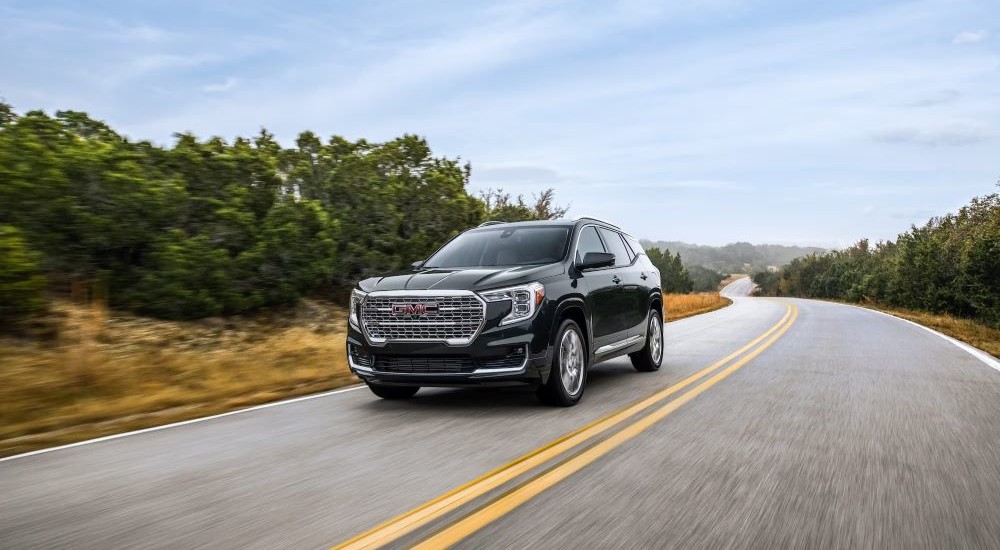
As much as we love the auto industry here at Crossroads Chevrolet GMC, car companies don’t always do the best job explaining the differences between their models, and the names they choose don’t usually help. While the GMC lineup has some of the finest trucks and SUVs on the market, offering something to meet the needs of a wide range of drivers, looking at the model names doesn’t necessarily tell you which is right for you. Both the GMC Acadia and the GMC Terrain are fantastic SUVs with a lot to offer, but checking out a picture of each of them or seeing their names doesn’t give you much to go on when trying to figure out what they have to offer.
Whenever you’re looking at new and used GMC SUVs for sale, it helps to have a game plan and know which model or models will work best for you. That’s why we’re here to make your shopping trip easier and provide unbeatable customer service that’s always focused on your needs. Of course, you don’t need to visit us just to find out the details of different GMC vehicles because we’re always happy to help you with everything you’re looking for online or over the phone. Let’s take a look at two of GMC’s most popular models, the Acadia and Terrain, to see how they compare and what makes them a great fit for different drivers.
The Basics: Midsize vs Compact
When we start to take a look at these two vehicles, there are some massive differences between them right off the bat that makes it very easy to distinguish them from each other. The GMC Acadia is a midsize SUV that has seating inside for up to seven passengers across its three rows. By comparison, the Terrain is a compact crossover SUV that’s significantly smaller in overall size and only has two rows of seating for up to five passengers. This is one of the biggest differences between them, and it helps most of our customers decide on one over the other simply based on how much passenger seating they need.
As you would expect, this difference in design means there are significant differences in size between them. The compact GMC Terrain measures 182.3 inches in total length, 72.4 inches in width, and stands 65.4 inches high. By comparison, the larger GMC Acadia is 193.4 inches long––a difference of nearly a full foot––and stands 66.7 inches tall. The difference in height between these two models is pretty minimal, but the Acadia is significantly longer than the Terrain, which is important to consider if you have a garage for your vehicle or other concerns about fitting it into your life.
Looking inside these two SUVs, not only do you find an extra row of seating inside the Acadia, which gives you more space for passengers, but it’s also roomier and provides you with greater cargo capacity. The GMC Terrain has 29.6 cu.ft. of rear cargo space behind the back seats and 63.3 cu.ft. of total cargo volume available with the rear seats folded down. With the Acadia, you get just 12.8 cu.ft. of cargo space behind the third row but will have 41.7 cu.ft. of cargo volume available behind the second row of seats and a total of 79 cu.ft. of cargo space behind the front row. You get more total space inside the Acadia due to its larger size but less room in the back since it has an extra row of seats.

Similar Trim Levels
This tremendous difference aside, there are some important ways that the GMC Acadia and Terrain are actually pretty similar. Perhaps most importantly, beyond the fact that they’re both GMC SUVs, is that they both have the same four trim levels available. The Terrain and Acadia start with the SLE trim, followed by the upscale SLT, the off-road-ready AT4, and finally, the high-end Denali. This is in keeping with GMC’s overall approach to its lineup and makes it easier to compare these two models and see what they have to offer.
In both vehicles, the SLE trim has all the standard features you could want, such as the GMC Pro Safety suite of advanced driver assistance technology that includes Forward Collision Alert with Automatic Emergency Braking, Lane Keep Assist with Lane Departure Warning, and more. Similarly, they both start with a six-speaker sound system and comfortable seating, with more options for added features. The SLT trims add upgrades like heated and power-adjustable front seats to the starting features.
With both SUVs, the AT4 trim is the way to go if you’re looking for something perfect for getting to remote campsites or if you tend to deal with a lot of dirt and gravel roads. This isn’t a hardcore off-road model like the Canyon AT4X, but it’s a great option for rugged driving thanks to standard all-wheel drive, active torque control, and more. Finally, the Denali trims represent the pinnacle of what these SUVs have to offer, with the most luxurious features available. Both Denali trims have Bose Premium sound systems, perforated leather-appointed seating, eight-inch reconfigurable driver information screens, and much more.
Differences Within Similarities
Even with the similarities between these models that mark them as siblings within the larger GMC lineup, there are some notable differences beyond their size. As we said, both of these models start with the SLE trim, but the two versions are not identical. For instance, the Acadia SLE comes with an eight-inch GMC infotainment display and Tri-Zone automatic climate control, while the Terrain SLE has a seven-inch GMC infotainment screen and single-zone automatic climate control. Since the Acadia is much larger inside, it makes sense that it features a more elaborate standard climate control system to keep all of your passengers comfortable, but it’s still worth pointing out.
Similarly, since these are such differently-sized vehicles, you’ll find completely different powertrains within them. Every 2023 GMC Terrain comes with a 1.5L Turbo four-cylinder engine that delivers 175 hp and 203 lb-ft of torque through a nine-speed automatic transmission. The 2023 Acadia, on the other hand, features a standard 2.0L Turbo four-cylinder engine with 228 hp and 258 lb-ft of torque. It also has an available 3.6L V6 engine that delivers 310 hp and 271 lb-ft of torque. Again, the larger size of the Acadia means it needs more power for excellent overall performance, but it’s still a notable difference.

How to Choose the Right GMC SUV
You can see that the differences between these two SUVs generally come down to the fact that one of them is a three-row midsize model, and the other is a two-row compact crossover. This fundamental distinction in design means they have very different requirements for the kind of power they each need and offer different amounts of space for passengers and cargo. You can’t go wrong with either of these SUVs; it simply comes down to which one better meets your needs and fits into your lifestyle. If you want something smaller, then the Terrain is a great choice, but if you need to have six people with you, you’ll want to go with the Acadia. Once you know which one will work for you, we’ll be happy to show you everything it has to offer.
Connect with us


- January 2026
- December 2025
- November 2025
- October 2025
- September 2025
- August 2025
- July 2025
- June 2025
- May 2025
- April 2025
- March 2025
- February 2025
- January 2025
- December 2024
- November 2024
- October 2024
- September 2024
- August 2024
- July 2024
- June 2024
- May 2024
- April 2024
- March 2024
- February 2024
- January 2024
- December 2023
- November 2023
- October 2023
- September 2023
- August 2023
- July 2023
- June 2023
- May 2023
- April 2023
- March 2023
- February 2023
- January 2023
- December 2022
- November 2022
- October 2022
- August 2022
- July 2022
- June 2022
- May 2022
- April 2022
- March 2022
- December 2021
- October 2021
- September 2021
- August 2021
- July 2021
- June 2021
- May 2021
- March 2021
- February 2021
- January 2021
- December 2020
- November 2020
- October 2020
Archives
- 2023 GMC Sierra Trim Levels
- Booneville Chevy Dealer
- Booneville GM Dealership
- Cars for Sale
- Certified Pre-Owned Chevy Dealer
- Chevy Dealer
- Chevy Dealer in Collierville, TN
- Chevy Dealer in Corinth, MS
- Chevy Dealer in Olive Branch MS
- Chevy Dealer Near Baldwyn
- Chevy Dealer Near Burnsville
- Chevy Dealer Near Henderson
- Chevy Dealer Near Iuka
- Chevy Dealer Near Me
- Chevy Dealer Near Ripley
- Chevy Dealer Near Savannah
- Chevy Dealer Near Southaven
- Chevy Dealers in MS
- Chevy Equinox for Sale
- Chevy Equinox for Sale in Corinth
- Chevy Financing
- Chevy for Sale
- Chevy for Sale Near Booneville
- Chevy Silverado for Sale
- Chevy Silverado for Sale in Corinth MS
- Chevy Silverado for Sale Near Booneville MS
- Chevy Silverado for Sale Near Iuka
- Chevy Silverado for Sale Near New Albany MS
- Chevy Silverado for Sale Near Selmer
- Chevy SUVs
- Chevy Trailblazer for Sale
- Chevy Traverse Dealer
- Chevy Trax for Sale
- Chevy Trucks
- Electric Car Dealership in MS
- Farmington GM Dealer
- Germantown Chevy Dealer
- GM Lease Turn In
- GMC Acadia Dealer
- GMC Acadia for Sake
- GMC Acadia for Sale
- GMC Acadia for Sale Near Booneville
- GMC Acadia for Sale Near New Albany
- GMC Canyon for Sale
- GMC Dealer
- GMC Dealer Near Crump
- GMC Dealer Near Iuka
- GMC Dealer Near Olive Branch
- GMC Dealer Near Southaven
- GMC Dealer Near Tupelo
- GMC Dealers in MS
- GMC Sierra 1500 for Sale Near Booneville
- GMC Sierra 1500 for Sale Near Ripley
- GMC Sierra 2500 HD for Sale
- GMC Sierra Dealer
- GMC Sierra for Sale
- GMC Sierra for Sale in Corinth
- GMC Sierra for Sale Near Iuka
- GMC Terrain for Sale
- GMC Terrain for Sale in Corinth
- GMC Terrain for Sale Near Booneville
- GMC Terrain for Sale Near Boonville
- GMC Trucks for Sale
- GMC Trucks for Sale Near Ripley
- GMC Yukon for Sale
- GMC Yukon for Sale in Corinth
- Mississippi Used Car Lot
- New Albany Chevy Dealer
- New Albany GMC Dealer
- Ripley Chevy Dealer
- Ripley GMC Dealer
- Sell My Car
- Sell Your Car
- Selmer SUV Dealer
- Selmer Used Chevy Dealer
- Sierra 1500 for Sale in Corinth
- SUVs for Sale
- Tennessee Chevy Dealer
- Trucks for Sale
- Trucks for Sale Near Booneville
- Tupelo GM Dealer
- Tupelo Used Car Dealer
- Uncategorized
- Used Buick Dealers in MS
- Used Cars for Sale
- Used Chevy Dealer
- Used Chevy Silverado for Sale
- Used Chevy Truck Dealership
- Used Chevy Trucks for Sale
- Used GM Dealership
- Used GMC Dealer
- Used GMC Sierra 1500 for Sale
- Used GMC Sierra Dealer
- Used GMC SUVs for Sale
- Used GMC Trucks
- Used GMC Trucks for Sale
- Used GMCs Near Tupelo
- Used SUVs for Sale
- Used Truck Dealer
- Used Trucks for Sale
- Value My Trade